Slowfeed Haysaver Nets
Slow feeding is better for your horse’s gut, mind and manners. These are the answers to the questions we hear most about our nets: what makes them different, how to set them up safely, and how long they last.
Why ours are different
Made in Australia
UV stabilised, marine grade polyethylene netting used in the fishing industry, made to last in sun and water.
- UV stabilised
- Marine grade
Square hole netting
Square or rectangular nets with square holes, rather than diamond netting that closes up as the hay is eaten.
- Stays open
- Easy access
4cm holes
Designed to slow your horse’s hay consumption. The best choice for small mouths and minis.
- Slowest
- Minis & foals
6cm holes
Keeps hay from spreading about. Suits stalky or cereal hay such as oaten hay, and round bales in general.
- Round bales
- Oaten hay
Choosing a net
What is the difference between your nets and other cheaper nets?
Most cheap nets are made from nylon, which is not always UV resistant, so they don’t last as long, and they are made in China where labour is much cheaper. Our nets are made in Australia from UV stabilised marine grade polyethylene, so they are made to last longer in the sun and the water.
They are also made in a square or rectangular shape with square hole netting (rather than diamond netting, which closes up as the hay is eaten) so the horses can access the hay better as it reduces. Put simply, the quality is better and our nets will last longer.
Why are there 4cm and 6cm size netting holes?
The 4cm size is designed to slow the horse’s hay consumption down, while the 6cm is designed to keep the hay from spreading about and is more suitable for stalky or cereal type hay such as oaten hay.
I would recommend the 6cm net for round bales in general unless you need to slow down the intake of your equines, or have mini horses or foals accessing the bale (their smaller hooves may get caught in the larger holes).
Can I use these nets for foals or minis?
We don’t recommend using the round bale nets for young foals under weaning age, especially mini foals, as they may be able to get a foot through the netting (especially the 6cm netting). If you need to feed mares and foals a round bale, contain it inside something like a large wooden apple/potato bin (they fit the small round bales) or a safe enclosed feeder designed for horses. Please don’t use the hay rings made for cattle, as they have spaces that can trap a young foal’s legs or head.
When foals are weaned, the safest way to feed them from a round bale in a net is to suspend the net from a shed roof or a strong tree branch so there is always tension in the netting. This discourages them from climbing on it and pawing at it.
Setting up your net
Can they be used on the ground?
Yes! We highly recommend using these nets at ground level so the horses can push against something to get the last bits of hay out, and it’s also a much more natural and healthy position to feed from.
You may want to tie the net (at one end only, so they can flip it around to access all the hay) to a tyre, a tree, or a fence (where it can’t be pushed under) so it doesn’t get tossed around and ‘lost’ or dragged through manure.
As the round bale gets smaller, what am I supposed to do? Does it have drawstrings to tighten?
Yes, there is a drawstring you will need to check and tighten, although I put my round bale on a solid pallet (that has no nails or loose bits) and fasten the drawstring around the base of the pallet so it stops the net from being dragged into the manure. The horses will push the loose netting aside to get to the parts that are still filled with hay, so it’s not generally a problem.
You can also suspend the net by the drawstring if you have a large shed or a big strong tree to hang it from. Then the hay falls to the bottom of the net as it’s eaten down, and you may only need to adjust the drawstring once or twice if it looks a bit loose.
If you have a net too big for your bale, it’s easy to tighten the netting by bunching the net on one side and tying some twine around it. This keeps the rest of the net tight so the horses can easily access the holes, which is important when they first start using the net.
Keeping horses safe
Is the marine netting safe for horses to play with and chew on?
Unless your horse has gaps between their teeth (as some very old horses may), the netting is very safe. If they chew on it too much they can make holes, but so long as these are repaired as soon as you see them (baling twine is fine, but we do supply mending twine), the horse won’t learn to benefit from this activity.
Always ensure that you have tied up the drawstring so there isn’t a ‘hoof sized’ loop to get caught in, and only secure one end of the net so it can be moved around, rather than form a hazard when empty (if at ground level). Horses will find it easier and less frustrating to use the net if it is tied at ground level so they can get the last bits of hay by pushing against the ground.
What do I do if my horse wears shoes?
You will need to contain the net in something, preferably with solid sides so their hooves can’t come into contact with it. This can be as simple as tying some pallets together around the bale (works fine if you have bigger horses) or making a fence from wooden rails. There are a few more ideas on our Pinterest page of Hay Feeder Ideas. If you want something to last and that is more portable, consider a manufactured poly feeder.
How long will it last?
How long will the net last?
It depends on how much you are using it and can vary under different conditions, but we have experienced the nets lasting 3–4 years and longer, provided any small holes are repaired as soon as they are seen. The material they are made from is marine grade UV stabilised netting used in the fishing industry, so will withstand a lot of weathering. Be sure to store your net in a safe place away from mice and rats when you’re not using it.
Slow feed nets
 Rein Clip Scissor snap Price range: $8.00 through $24.00
 Brass Rope Clip$9.00
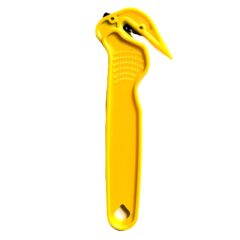 Twine Cutter Safety stable knife$5.50
 HaySaver Knotted Round Bale Hay Net 4cm or 6cm holes Price range: $139.00 through $199.00
 Dura-Tech Stablehand Haynet Filler$29.95
 HaySaver Knotted Hay Net 3, 4 & 6cm hole size Price range: $24.95 through $79.95
 BagABale The Affordable Hay Transport Bag$22.00
 Double-end Solid Brass Clip$9.00
Not sure which net?
Tell Cynthia about your horses and how you feed, and she’ll point you to the right size and hole.