
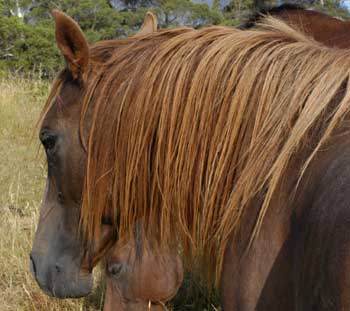
Colic and peritonitis are both emergencies that call for immediate veterinary treatment, and both can be triggered by the same hidden cause: encysted strongyles, a larval stage of small strongyle that burrows into the lining of the horse’s colon and can go undetected by a standard worm count.
I learned this the hard way when my six-year-old Arabian stallion, Finn, went down with colic and hypothermia on a cold, wet day.
Finn’s story
The boys had been fed around 9am and Finn seemed fine, but when I went back to the paddock at lunchtime to refill the hay, I found him lying down in the rain. As I got closer, I could see he was in real pain, so I gave him some rescue remedy (I always keep some in the car) and raced home for a warm rug and my stethoscope.
His heart rate was up to 48bpm. He was quiet rather than rolling, so I let him stay down and took stock. His three paddock mates stood watch, with the senior gelding occasionally nudging him to try to get him up. After thirty minutes with no change in his pain, gut sounds or heart rate, I called the vet, who arrived within the half hour.
The vet checked his vitals, gave him painkillers and a muscle relaxant, then confirmed an impaction on rectal exam. Finn was stomach tubed with paraffin oil and Tympanel to help the impaction move through, and he handled his first rectal exam and stomach tube without a flinch.
If you’re ever unsure what you’re looking at in the paddock, this guide to horse colic signs and what to do is a good one to keep bookmarked, since catching it early made all the difference for Finn.
On the vet’s advice I walked him home, since movement helps shift an impaction, and he tucked into hay in the barn overnight with his mates nearby. The next morning, he was flat again, off his feed and lying down in pain. This time the vet found a high temperature that pointed to infection, and Finn was started on aggressive antibiotics for peritonitis.

He picked up the following day and I moved him to fresh pasture, but by the day after that he was down again. The vet suggested worming him a second time, this time with Equest Plus for tapeworm (he’d already had Panacur ten days earlier), since tapeworm burdens are known to cause impaction colic in their own right. We did that straight away, along with more painkillers to keep him comfortable.
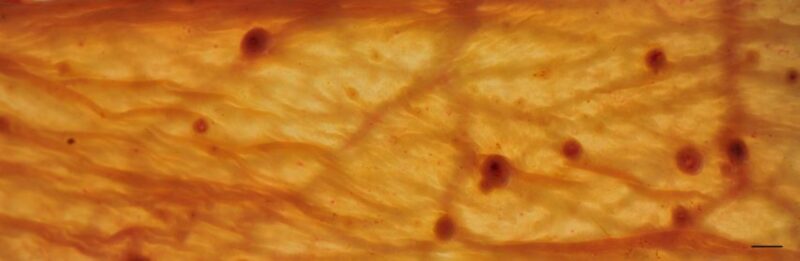
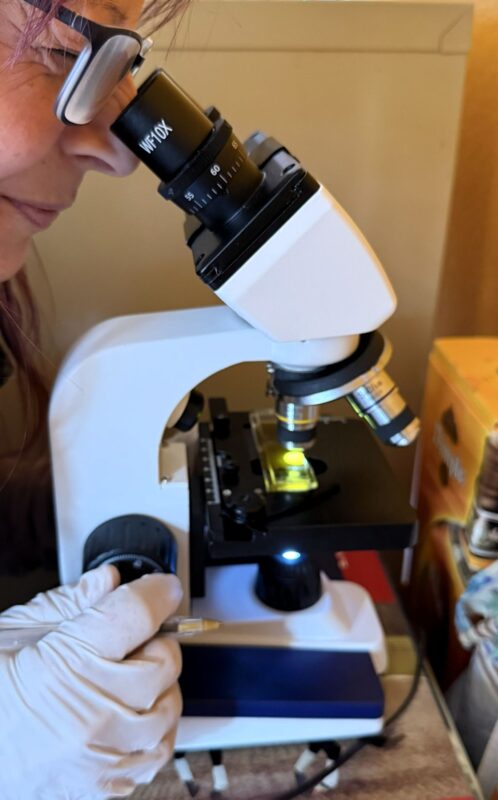
The following morning, he was bright again, and his manure was already carrying a large number of tiny, hair-like worms, which I believe were small strongyles. The Panacur had done its job on the existing worm burden, but because I hadn’t been able to give it for five consecutive days, the encysted strongyles that were still developing emerged all at once and caused the peritonitis and colic. Finn passed that burden and made a full recovery, though many horses in his position don’t survive without prompt treatment.
Why this happens even after worming
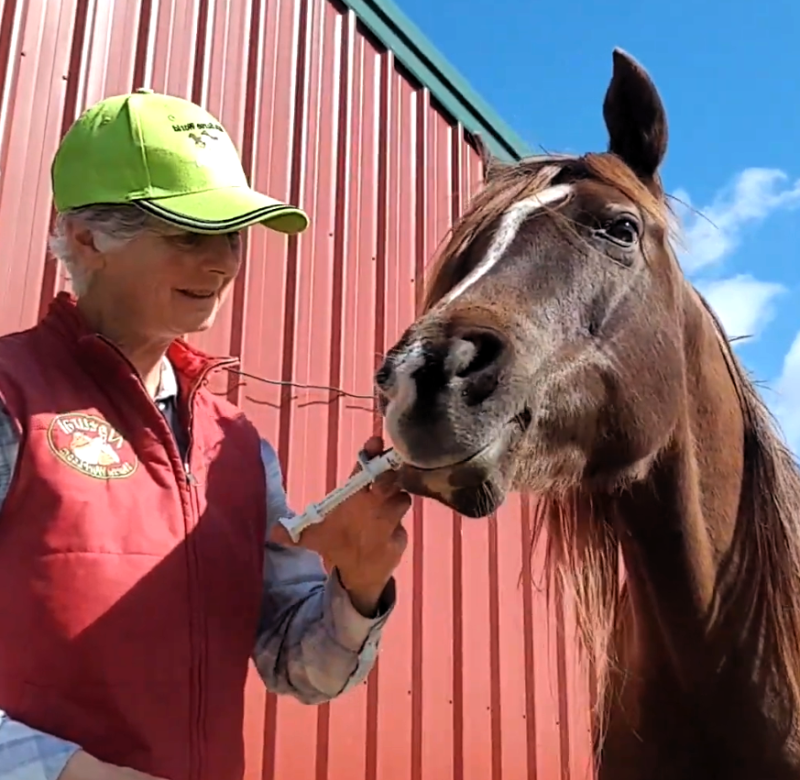
Finn may be one of the roughly 20% of horses that carry 80% of a herd’s worm burden, which would explain such a large emergence. My original plan had been to give five consecutive days of Panacur to clear any encysted strongyles, but with four strong, unwilling horses and no drench gun, dosing them solo for five days straight proved impossible (liquid wormer is remarkably easy for a horse to spit back out). I gave up and decided to rely on Equest at their next scheduled worming instead.
That decision was the real mistake. It turned out to be exactly twelve months since their last Equest dose, so they were overdue. Since then, I’ve stuck to a simple rule: worming once yearly with Equest Plus (or Quest) for encysted strongyles, generally at the start of winter as recommended by my vet. This timing also catches bot larvae as the bot flies have left with the warmer weather.
What are encysted strongyles?
Encysted strongyles are the third-stage larvae of the small strongyle. Once eaten by a grazing horse, they burrow into the lining of the colon and form a cyst, which is where the name comes from. They can stay dormant in the gut wall for anywhere from eight weeks to several years before developing into fourth-stage larvae and moving into the colon.
Only two active ingredients are proven to kill them: moxidectin (found in Equest and Quest, with around a 90% success rate), and fenbendazole (found in Panacur 100, given at 10ml per 100kg for five consecutive days). No other wormer reaches this larval stage.
When a large number emerge at once, the result can be fatal, and I suspect a fair few “mystery” horse deaths come down to exactly this. A smaller emergence can still bring on colic, scouring, or oedema.
Importantly, a standard worm egg count will not reveal how heavily a horse is carrying encysted strongyles, since these larvae are dormant in the gut lining rather than shedding eggs. This is exactly why the once-yearly schedule matters, regardless of what a fecal count shows.
The takeaway

Worming once yearly with Equest Plus, Quest (best done at the start of winter), or a full five-day course of Panacur is the only reliable way to stop encysted strongyles catching your horse, and you, off guard. Colic can come on fast, as it did with Finn, so knowing the early signs and staying ahead of your worming schedule are the two best things you can do for your horse.
Equest is widely available, often at a fair price, through online produce stores, saddleries, rural stores, and most vets. It’s a small, simple step that can spare your horse a great deal of suffering.
Good, to-the-point article – thanks Cynthia. Was Googling peritonitis and it popped up, as have a student with a horse with peritonitis at the moment, so helpful for prevention strategies. Jayne.