After my recent posts on worming and fecal egg counts, one question kept coming up:
“If fecal egg counts don’t detect encysted worms, how do I know if my horse has them — and should I treat for them?”
It’s a great question, and probably one of the most misunderstood areas of horse parasite management.
Let’s clear up some of the confusion.
What Are Encysted Worms?
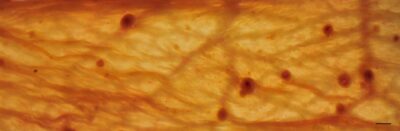
The most common internal parasites of horses are small strongyles, also known as cyathostomins.
When horses graze, they swallow tiny infective larvae from pasture. Some of these larvae develop into adult worms that live in the gut and lay eggs, which are then passed out in manure.
Others take a different path.
Instead of developing straight into adults, they burrow into the lining of the large intestine and become enclosed within tiny cysts in the gut wall. In this dormant stage, they are known as encysted larvae.
They can remain there for months, sometimes much longer, before emerging and continuing their life cycle.
Why Don’t They Show Up on a Fecal Egg Count?
Because encysted larvae aren’t laying eggs.
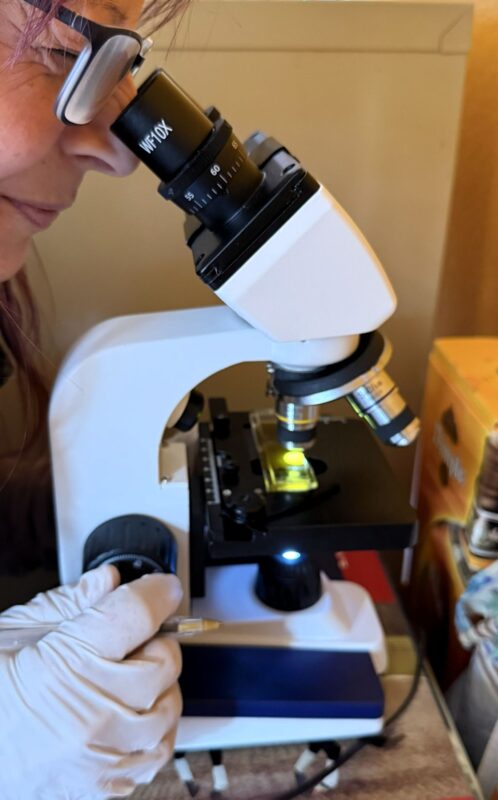
A fecal egg count measures the eggs being shed by adult worms living in the gut. It does not reliably detect:
- Encysted small strongyle larvae
- Immature worms
- Migrating larval stages
- Bots
- Most tapeworm infections
This means a horse can have a low egg count and still have some encysted larvae present.
That’s often the point where people become concerned.
Does a Low Egg Count Mean My Horse Has Hidden Worm Problems?
Not necessarily.
Here’s the important thing to understand:
Most horses have some encysted small strongyle larvae.
In fact, because these parasites are so common, it’s normal for grazing horses to carry them to some degree.
The presence of encysted larvae alone does not mean your horse is unhealthy or in danger.
What matters is the number of larvae present, the horse’s overall health, age, management, and whether those larvae are causing disease.
When Do Encysted Worms Become a Problem?
The greatest risk occurs when large numbers of dormant larvae emerge from the gut wall at the same time.
This can cause significant inflammation and damage to the intestinal lining.
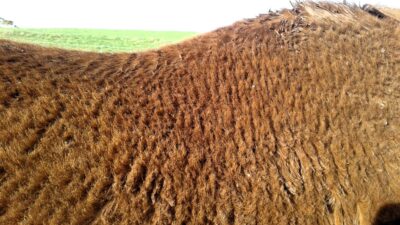
Signs may include:
- Weight loss
- Diarrhoea
- Poor body condition
- Recurrent colic
- Lethargy
- Reduced appetite
This condition, known as larval cyathostominosis, can be serious and occasionally life-threatening.
Fortunately, it appears to be relatively uncommon compared with the large number of horses that quietly carry encysted larvae without any obvious problems.
Some parasitologists believe that encysted larvae may be stimulated to emerge when adult worm populations are reduced, particularly if a dewormer removes adult worms but does not effectively target encysted stages. This is one reason why treatment choice can be important when significant encysted burdens are suspected.
So How Do You Know If Your Horse Has Encysted Larvae?
The honest answer is that there is currently no simple test that accurately measures encysted worm burdens in living horses.
A fecal egg count won’t tell you. Blood tests have been investigated, but they are not routinely used for this purpose. Instead, parasite control decisions are usually based on risk assessment rather than direct measurement.
Factors that may increase risk include:
- Young horses
- Horses with a history of heavy worm burdens
- Poor pasture hygiene
- High stocking densities
- Horses that have not been monitored or wormed appropriately for long periods
- Clinical signs suggestive of parasite-related disease
One of the challenges with parasite management is that, short of post-mortem examination, no one can know the exact worm burden within a living horse. We work with the best information available — fecal egg counts, risk factors, clinical signs, pasture management, and the horse’s history — rather than complete certainty.
What About Treating Every Horse Once a Year?
For many years, routine annual treatment for encysted strongyles was commonly recommended.
However, parasite management has evolved considerably over the last two decades.
Today, most experts agree that routinely worming every horse on the same schedule is no longer the best approach.
Instead, modern parasite control focuses on:
- Regular fecal egg counts
- Monitoring wormer effectiveness
- Identifying high shedders
- Good pasture management
- Individual risk assessment
The goal is to use wormers strategically rather than automatically.
This helps reduce unnecessary treatments and slows the development of wormer resistance.
Should You Treat for Encysted Strongyles?
This is where horse owners often want a simple yes-or-no answer. Unfortunately, it’s not quite that simple.
Consider treatment if:

- Your horse is young
- Your horse has a history of significant parasite burdens
- Fecal egg counts have been consistently moderate to high
- Your property has high grazing pressure or poor manure management
- Your veterinarian identifies your horse as higher risk
You may choose a more conservative approach if:
- Your horse is a healthy adult
- Fecal egg counts are consistently low
- Pasture management is good
- Wormer effectiveness has been monitored
- There are no clinical signs suggesting parasite-related disease
In these cases, many owners choose to discuss treatment timing and frequency with their veterinarian rather than automatically treating on a fixed calendar schedule.
Why The Choice of Dewormer Matters
Not all dewormers affect the same stages of the parasite life cycle.
Some products primarily target adult worms living in the gut lumen, while others also have activity against encysted larval stages within the gut wall.
Because encysted larvae can make up a substantial portion of a horse’s parasite burden, treatment decisions should consider more than just the fecal egg count result.
If there is concern about encysted strongyles, speak with your veterinarian about which products are effective against those stages and whether treatment is appropriate for your horse’s situation.
What Treatments Target Encysted Strongyles?
The two products traditionally used against encysted small strongyles are:
Moxidectin (Equest/Equest Plus)
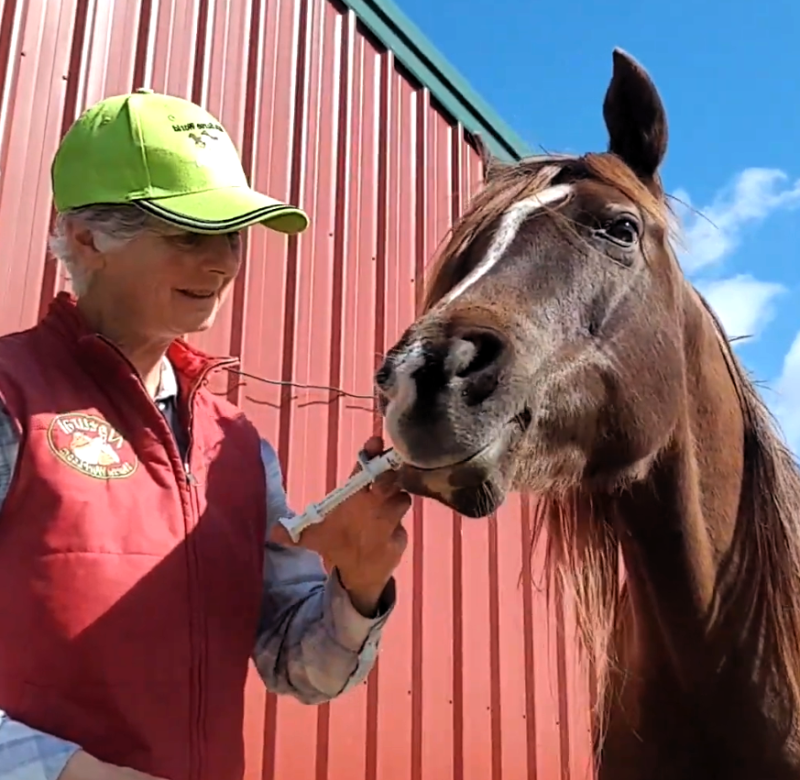
A single-dose treatment that has activity against encysted larval stages as well as adult worms.
Fenbendazole (5-Day Program)
Historically used as a five-day treatment course for encysted larvae. However, resistance to fenbendazole is now widespread in many regions, meaning it may not be effective on some properties.
For this reason, treatment choices should be based on current veterinary advice and local resistance patterns.
The Goal Isn’t a Worm-Free Horse
This may be the most important takeaway of all. Modern parasite management isn’t about eliminating every worm from every horse. That’s neither realistic nor necessarily beneficial.
The goal is to maintain parasite burdens at levels that the horse can comfortably cope with while reducing disease risk and preserving the effectiveness of the wormers we still have available.
Fecal egg counts help us monitor adult egg-shedding worms. Awareness of encysted larvae reminds us that a low egg count doesn’t tell the whole story. By considering both, we can make more informed decisions and move away from the old habit of worming simply because the calendar says it’s time.
The goal is informed decision-making. We rarely know exactly how many worms a horse carries, particularly encysted larvae. Instead, modern parasite management uses a combination of fecal egg counts, risk assessment, pasture management, and strategic treatment choices to reduce disease risk while avoiding unnecessary deworming.
Further Reading
For those who enjoy digging into the science, these resources provide excellent information:
- AAEP Internal Parasite Control Guidelines
- Equine Cyathostomins: Biology, Clinical Significance and Therapy
- Martin K. Nielsen’s YouTube channel on modern equine parasite management
These resources all support a more targeted, evidence-based approach to parasite control rather than routine blanket treatment.