Noticing the early signs of laminitis
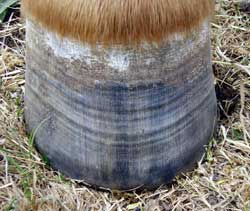
After finding hoof rings on one of my horses last week, I sat down and ran through my actual laminitis prevention routine for the horses I watch most closely this time of year. You know the ones. Those who’ve come through winter a bit fat, the ‘cresty’ ones, and the ones who’ve had a scare before.
It’s not one clever fix or product. It’s a handful of small things, done consistently, that add up to a horse who gets through spring without a drama.
Laminitis risk builds from several directions at once, usually diet, movement and the state of the hoof together, so the prevention has to work the same way. Here’s what I actually do.
1. Monitor grazing risk daily for real laminitis prevention
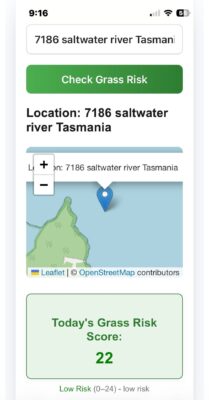
I check the LamiGuard app or website every day for a risk rating and safe grazing windows, rather than guessing at what the grass is doing. Spring and autumn are the two highest-risk windows for laminitis in most of Australia, as cold nights followed by sunny days push sugar levels up in the grass.
2. Feed a custom balanced mineral mix and salt, every day
A properly balanced mineral mix, fed daily along with salt, is the base of everything else on this list. I use my own custom mix, or the HoofXtra mineral mix when I’ve run out of ingredients for my own.
3. Feed a toxin binder every other day
Either Mycosorb A+ or Elitox, alternating every other day.
4. Support cresty, at-risk horses through high-growth periods
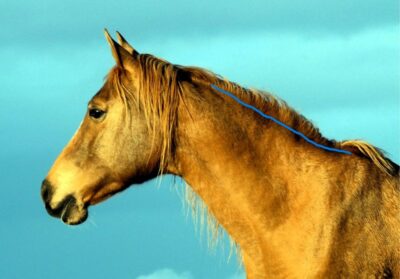
For horses carrying a cresty neck, or any time the grass turns particularly green and lush, I add KER Equishure and Kohnke’s Own Trim.
5. Keep up regular trimming and encourage self-trimming
Hoof health and laminitis prevention go hand in hand. I keep up regular trimming and let my horses self-trim as they travel over gravel to water and their bucket feeds, using the Radius Rasp 2 Pro to help the process along.
6. Offer low-sugar hay in the afternoon and evening
Grass sugars peak in the afternoon and early evening. During the highest-risk hours, I offer ad-lib grassy hay in slow feed nets that’s low in sugar and starch instead of pasture.
7. Make sure they move

In the herd, back and forth to water, shelter and their feed, rather than standing in one spot all day. I manage my property around the Equicentral System, which is built around exactly this kind of natural movement.
None of these on their own would be enough. Together, they’ve kept my most vulnerable horses sound through spring and autumn that would have caught them out ten years ago.
If you want the full picture beyond this list, this book is the one I’d point you to for understanding, curing and preventing laminitis properly. You can also find more detail on spotting the early signs on my laminitis prevention page.