Are You Worming Your Horse Out of Habit — Or Out of Need?
 Here’s a question: when did you last worm your horse, and do you actually know if they needed it?
For most of us, worming has been a calendar event — every 6, 8, or 12 weeks, regardless of what’s actually going on inside our horse. And for a long time, that’s what we were all told to do.
But the science has moved on, and so have I.
Worms: What Most People Don’t Know
All grazing horses carry worms — and that’s completely normal. A low worm burden actually helps keep the immune system ticking along nicely. It’s only when numbers get out of hand that things go wrong: weight loss, colic, diarrhea, and in serious cases, life-threatening illness.
The problem is, we can’t tell which horses actually have high worm burdens just by looking at them. Some horses are what we call “low shedders” — they naturally keep their worm numbers in check. Others are “high shedders” and need more support. Worming every horse the same way ignores all of that.
And here’s the bigger issue: decades of routine worming have created anthelmintic resistance. Worms are adapting faster than new drugs can be developed. We are genuinely running out of effective options — and blanket worming is making it worse.
What Strategic Worming Actually Looks Like
The good news? There’s a smarter way, and it’s not complicated.
Strategic worming is built on one simple principle: test, don’t guess.
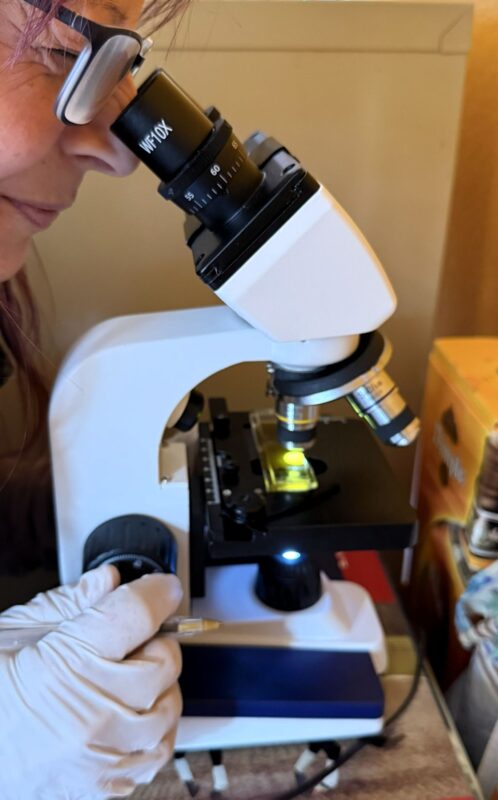
Fecal Egg Counts (FECs) in spring, summer, and autumn tell you which horses actually need treating. Only high shedders — usually over 300 eggs per gram — get wormed during the grazing season.
Annual Fecal Egg Count Reduction Tests (FECRT) check whether the wormers you’re using are still working. This matters more than most people realise.
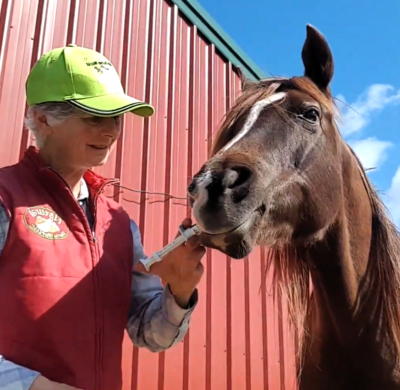
Autumn and winter are the time to think about encysted redworms (small strongyles/cyathostomes) — the sneakiest and most dangerous of the lot. Their larvae can hide deep in the gut wall and emerge all at once, causing severe, sometimes fatal diarrhea. Young and high-risk horses may need a targeted treatment like moxidectin at this time of year.
Tapeworms are worth addressing once a year, or you can use a saliva or blood test if that’s available to you.
Foals need a more structured program from about 2–3 months of age, guided by regular FECs.
Don’t Forget the Pasture

Here’s something that often gets overlooked: your paddock management is your first line of defense.
Regular poo-picking (removing droppings 2–3 times a week), rotating paddocks, avoiding overgrazing, and cross-grazing with cattle or sheep can dramatically cut worm exposure before you ever reach for a wormer.
Good land stewardship protects your horses AND the soil ecosystem — including dung beetles and insects that are harmed by wormer residues passing through manure.
For more on how I approach this, have a read of these:
- My full worming guide
- Why I do still use chemical wormers (and when)
- The colic and worm connection — a real story
Healthy Horses Start from the Inside Out
One thing strategic worming has taught me is that healthy horses cope better with parasites. A horse with a strong, well-nourished body is far more resilient.
That’s why I’m such a believer in getting the mineral balance right. Deficiencies — especially in copper, zinc, and selenium — compromise immunity and slow recovery. If your horse is struggling to hold weight, has a dull coat, or just doesn’t seem quite right, their mineral intake is worth looking at.
Balanced Equine mineral supplements are what I recommend and use myself. Have a read and see which option suits your horse best.